

By the time everyone agrees, the cost is higher.
The warning often arrives too early to be popular.
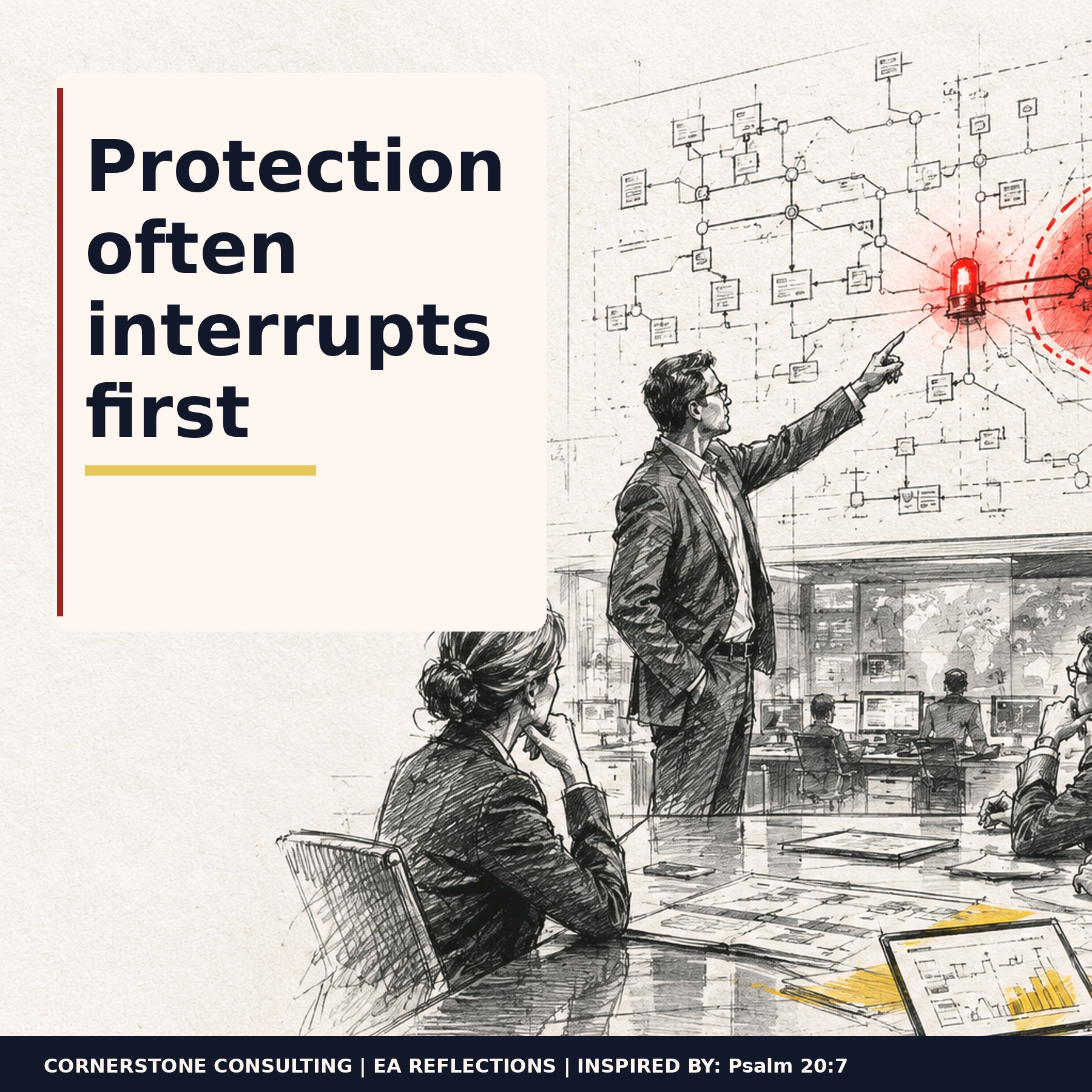
A small signal can save a large investment.
I have watched small warnings prevent expensive technology mistakes when leaders were willing to pause early. The signal was rarely dramatic. It was usually a pattern, a dependency, or a concern from someone close enough to the work to see what the plan missed.
Enterprise protection rarely looks dramatic while it is working.
A stable enterprise is held together by many early warnings: a support analyst who notices a pattern, an integration alert that fires before customers feel pain, a risk review that slows a weak decision, a finance partner who questions the recurring cost, a frontline manager who says the process is harder than the slide suggests.
These signals can feel inconvenient. They interrupt momentum. They challenge the neat story. They ask leaders to stop a bus that seems to be moving in the right direction. But many costly failures are avoided because someone heard the warning before the impact arrived.
Enterprise architecture has a protective role in this sense. It is not protection through control for control’s sake. It is protection through attention, connected evidence, and disciplined escalation. A good architecture practice helps the organization see the ambush before it becomes an incident, a write-off, a customer failure, or another exhausted team.
Architects cannot limit themselves to big strategy documents, technology choices, vendor plans, and program structures. They also need practical ways to listen to the enterprise. That means paying attention to metrics, dependencies, exceptions, decisions, risks, commercial constraints, and the people doing the work. These listening posts help architects see whether strategy is actually working, where risks are emerging, and where the architecture needs to adapt.
The danger is that leaders often trust the impressive thing more than the protective thing. They trust the big program, the funded platform, the confident plan, or the familiar supplier, while ignoring the modest signal that something is off.
Good EA helps leaders pause early enough to act cheaply. It turns weak signals into clear choices: continue with eyes open, change the design, strengthen the guardrail, or stop before damage compounds. That is not negativity. It is stewardship of money, people, reputation, and customer trust.
Today, look for the warning that is easy to dismiss because it is small, awkward, or badly timed. Protection may arrive as interruption before it arrives as relief.
Reflection:
What warning is the enterprise giving us that we have labelled as inconvenience?
Practice:
Identify one live initiative and list its three earliest warning indicators. Assign an owner for each indicator and agree what action will happen if it appears.

Leave a Reply