

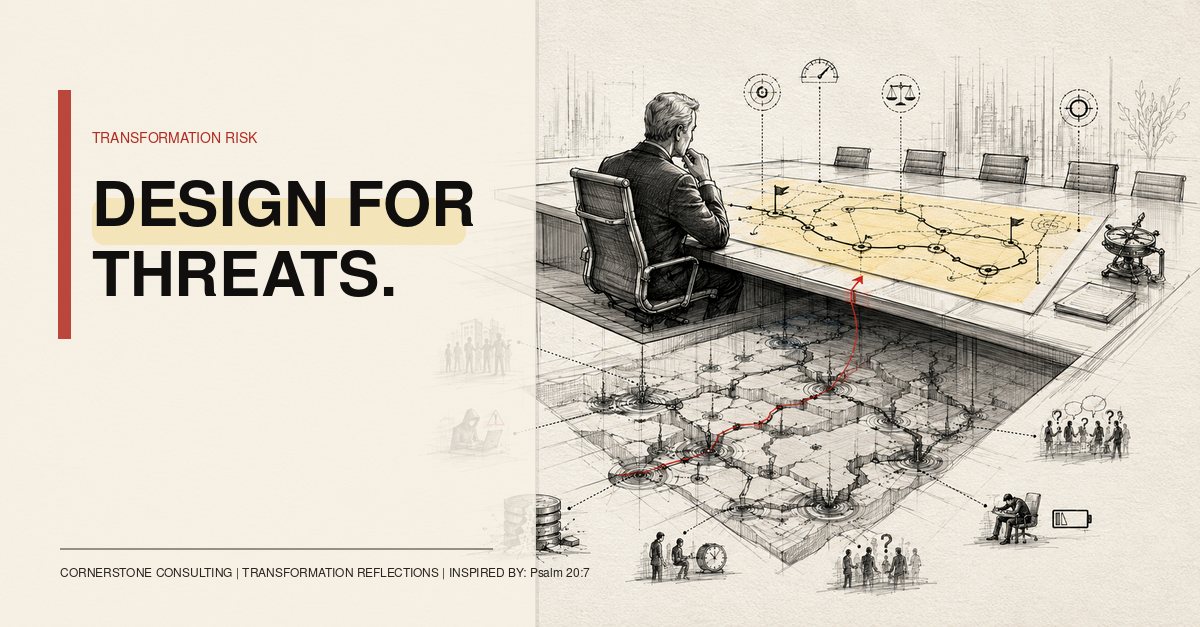
The best architecture protects the enterprise before the threat is obvious.
The risks that hurt transformation most are rarely the ones sitting neatly in the risk register
A fast program can still be exposed. Speed is not protection
Executives are often asked to approve transformation plans based on visible risk. The register is reviewed. The dependencies are colour-coded. The major assumptions are listed. The governance pack looks tidy.
But many of the risks that hurt an enterprise are not visible at the moment the plan is approved.
They sit in supplier behaviour, security exposure, data quality, integration timing, role ambiguity, regulatory interpretation, customer confusion, or fatigue inside the business. No one is trying to ignore them. They simply have not appeared yet. That is why an Enterprise Architect should never design only for the risks the room can already see.
Good architecture creates protection before the threat is obvious.
That protection is not fear-based. It is design discipline. It asks: where could this change create fragility? What decision rights are unclear? Which capabilities are carrying too much load? What data movement is assumed but not proven? Where would a local workaround create enterprise cost? What would we need to know early if the environment shifted?
These questions matter because transformation plans usually describe the path the organization wants. Architecture also needs to describe the conditions under which that path remains safe.
This is especially important when momentum is high. Leaders can become reassured by visible activity. Teams are busy. Vendors are engaged. Milestones are moving. But speed does not equal protection. A program can move quickly while becoming more exposed underneath.
The executive discipline is to build early warning into the design. That includes risk signals, decision thresholds, accountable owners, fallback options, dependency visibility, and a clear route for escalation. It also includes the courage to pause when a pattern suggests the plan is entering unsafe ground.
This is not bureaucracy. It is the difference between a team discovering a problem while it still has options and discovering it when every option has become expensive. The earlier leaders can see strain, the more room they have to make a commercial choice instead of an emergency choice.
Cornerstone Consulting’s enterprise architecture advisory is valuable here because it helps leaders connect risk to the operating system of the business. A threat is rarely isolated. It touches capabilities, process, technology, data, controls, people, and reputation.
The unseen threat should not make leaders anxious. It should make them thoughtful. The goal is not to predict everything. The goal is to design so the enterprise can detect, absorb, and respond when something changes.
The plan may be approved in a meeting, but it is protected by the quality of the design behind it.
Reflection
What hidden fragility is your transformation mistaking for progress?
Practice
Choose one dependency and define its earliest warning signal, accountable owner, and escalation point.
What is one pattern you have noticed in organizations that others could learn from?
Inspired by: Psalm 20:7
Darin Paton is the Owner of Cornerstone Consulting Inc., an Alberta-based enterprise architecture and SAP ERP transformation advisory firm serving organizations across complex business and technology change for over 15 years. 30+ years as an EA and involved in SAP.
#EnterpriseRisk #StrategicArchitecture #TransformationGovernance #ExecutiveLeadership #DecisionRights #CornerstoneConsulting

Leave a Reply