

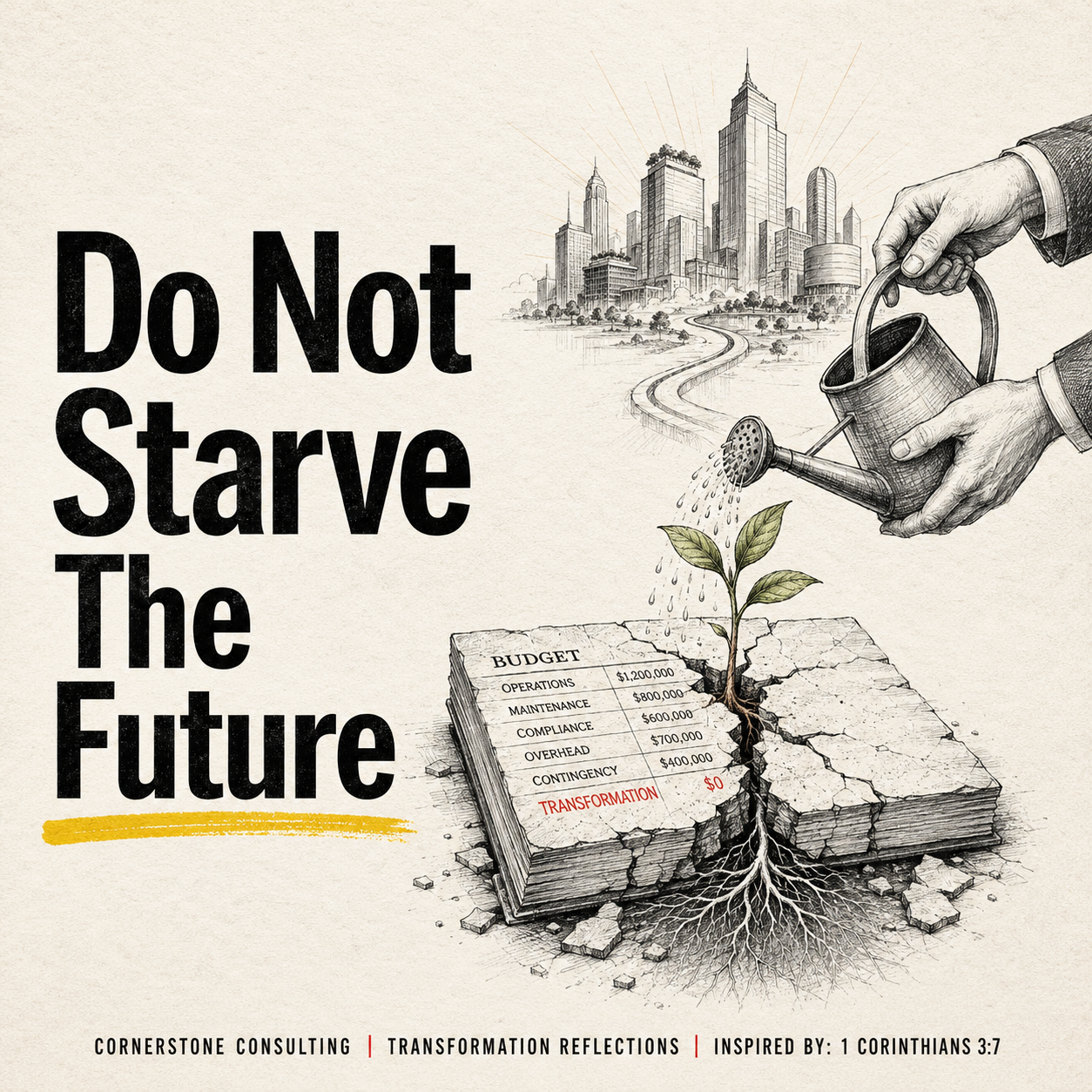
Transformation value rarely grows by headline alone.
The quiet conditions matter most.
Do not cut the soil and expect fruit.
Transformation growth rarely comes from the visible initiative alone. A new system, AI use case, operating model, or customer platform may get the headline, but the growth depends on quieter work: clean data, integrated processes, decision rights, adoption support, controls, training, service readiness, and benefit ownership.
That is why cost optimization has to be careful. If leaders only fund what is visible, they can keep the project name alive while starving the conditions that make the project useful. The enterprise may still launch something, but value arrives thin. Teams keep manual work. Customers feel the gaps. Finance sees delayed benefits. Leaders wonder why the investment did not perform.
A executive team should ask a simple question before reducing transformation spend: “What makes this outcome grow after launch?” The answer often sits outside the program budget. It may be in process ownership, data stewardship, cyber assurance, integration capacity, business change leadership, or retirement of old work. These are not extras. They are the soil that allows the investment to take root.
Enterprise architecture helps leaders see those conditions clearly. It can trace an intended benefit back to the capabilities, systems, data, roles, controls, and operating routines required to sustain it. EA coaching can help executives decide what to protect, what to stop, and what to sequence so the organization reduces waste without removing the very capacity needed for value.
This discipline is especially important when cost targets are real and growth targets remain unchanged. The organization needs a visible value path, not a list of isolated reductions. Each saving should be tested against the benefit it may delay, weaken, or make impossible.
The point is not to spend more by default. It is to spend with enough discipline that savings do not quietly become value leakage. Cut the activity that no longer serves the outcome. Protect the enabling work that lets the outcome grow.
Reflection
What quiet enabling work makes our most important transformation outcome grow after launch?
Practice
For each transformation investment, create a growth conditions list: data, integration, adoption, controls, process ownership, retirement of old work, support readiness, and benefit ownership. Protect the items that make the value real.
What would you add, challenge, or reframe from your own experience?
Inspired by: 1 Corinthians 3:7
Darin Paton is the Owner of Cornerstone Consulting Inc., an Alberta-based enterprise architecture and SAP ERP transformation advisory firm serving organizations across complex business and technology change for over 15 years. 30+ years as an EA and using/architecting SAP.

Leave a Reply