

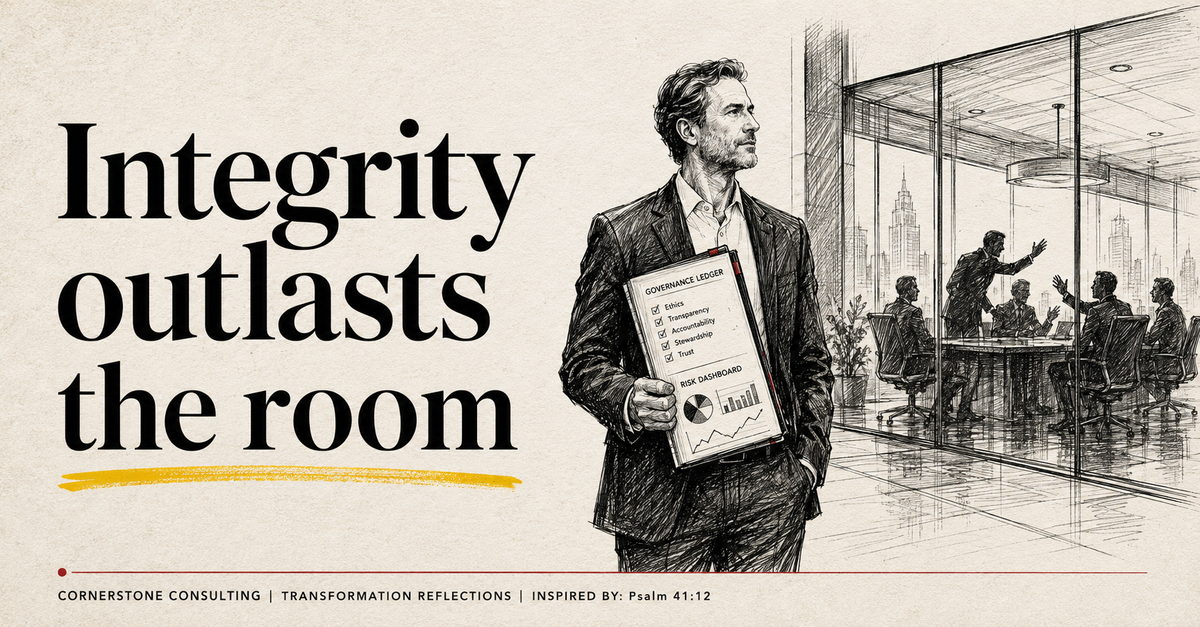
Executives do not always get misunderstood because they are unclear.
Sometimes they are misunderstood because they are protecting something important.
Integrity has a longer clock than approval.
Integrity is easy to admire and hard to fund when the room misunderstands the decision.
Executives face this often. A leader slows an AI initiative because governance is not ready, and the room hears resistance. A CIO rationalizes applications, and business units hear loss of control. A CFO challenges transformation benefits, and sponsors hear a lack of vision. A CEO insists on clearer decision rights, and teams hear bureaucracy.
In those moments, the executive has to decide whether credibility will be measured by immediate approval or by disciplined stewardship.
The pressure is real because transformation rewards confident storytelling. But enterprise change also needs leaders who will protect the truth when the optics are messy. Data quality may be worse than the dashboard suggests. Integration risk may be hidden behind project optimism. Controls may be weaker than the pace of AI adoption. Adoption may look good in training numbers but weak in daily work.
Enterprise architecture helps leaders hold that tension with evidence. It gives structure to uncomfortable conversations about dependencies, risk, value, security, process ownership, and operating-model fit. It also helps separate personal opinion from enterprise facts.
That is why this is a useful topic for future blog input. Readers may want more practical writing on AI governance audits, regulatory readiness, architecture assurance, executive decision forums, or how to challenge a program without becoming the person who only says no.
Integrity in leadership is not stubbornness. It is the discipline to keep the enterprise honest when speed, politics, or reputation make shortcuts attractive.
The goal is not to slow the enterprise. The goal is to move with confidence because the controls, architecture, and accountability are real.
What integrity-pressure topic should a future blog address?
Reflection
Where are you being asked to trade evidence for momentum?
Practice
Before the next governance meeting, write one sentence that explains the risk you are protecting the enterprise from, without blaming any person or team.
Darin Paton is the Owner of Cornerstone Consulting Inc., an Alberta-based enterprise architecture and SAP ERP transformation advisory firm serving organizations across complex business and technology change for over 15 years. 30+ years as an EA and using SAP.
C-level leadership, AI governance, enterprise architecture, executive integrity, regulatory readiness, transformation risk, Cornerstone Consulting

Leave a Reply