

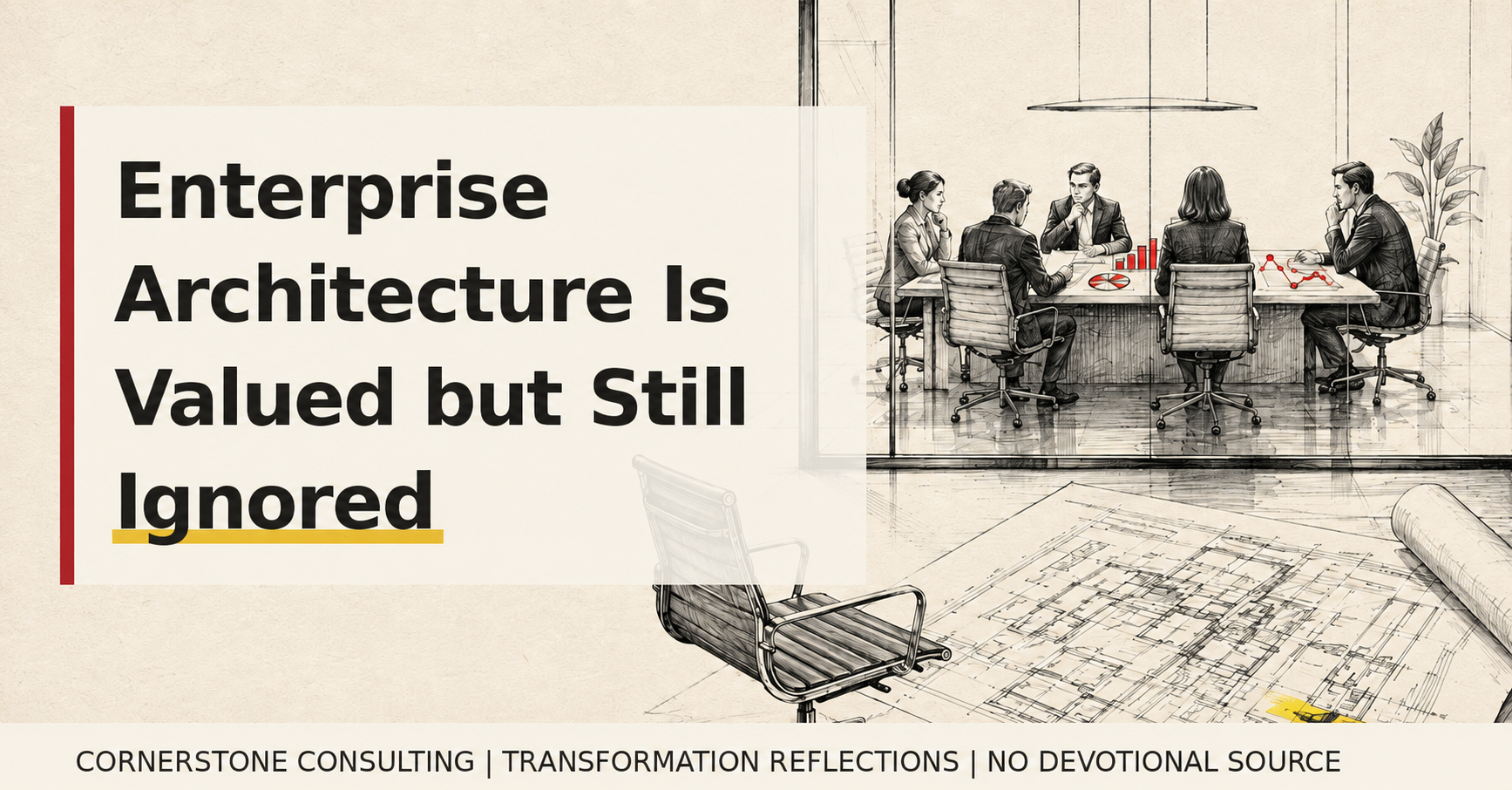
Everyone says architecture matters.
Then the real decision happens without it.
That is how valued work stays ignored.
I have seen EA respected in steering decks but absent when funding, vendor, scope, and operating-model choices were made. The lesson is uncomfortable: architecture must show exactly where involvement changes the outcome, or respect will remain polite and optional.
Many enterprises value Enterprise Architecture in principle. Leaders like the idea of coherence, reduced complexity, better decisions, cleaner roadmaps, and fewer surprises. Yet the same organizations often leave the Enterprise Architect outside the moments where those outcomes are actually shaped.
The architect is asked to review after the funding direction is set. To validate after the vendor is preferred. To document after scope is negotiated. To govern after trade-offs have already become commitments. The function is respected, but not involved.
That gap is costly because architecture value is time-sensitive. A dependency identified after approval becomes a delay. A data ownership issue found after design becomes rework. A control gap discovered after build becomes risk. An operating-model mismatch found after go-live becomes frustration for the business. The later the architect enters, the more the work shifts from shaping choices to explaining consequences.
An Enterprise Architect (EA) should not respond by asking to be in every meeting. That usually makes EA easier to ignore. The better move is to make relevance specific. Use an EA relevance assessment before major investment, ERP, vendor, roadmap, or operating-model decisions. Ask where the decision changes capability, data, controls, integration, process ownership, technology debt, customer experience, or enterprise risk. If the answer is meaningful, architecture belongs early. If not, stay light.
The assessment can be simple. Score each dimension high, medium, or low. Then agree whether EA should shape the decision, advise the decision owner, perform a targeted review, or stay informed. This turns architecture from a standing ceremony into a decision condition.
This is how EA earns practical involvement. It connects architecture participation to decision quality, not professional preference. It helps executives see when early architecture improves speed, reduces avoidable complexity, protects value, and clarifies ownership.
EA advisory and coaching fits this problem because the goal is not more architecture activity. The goal is better enterprise choices. Respect is useful, but involvement is where outcomes change.
Reflection Question:
Where is EA respected in your organization but still absent from the decisions where its value would matter most?
Practice:
Create a one-page EA relevance assessment for the next major decision. Rate the decision against capability impact, operating-model change, data ownership, controls, integration, technical debt, ERP/core-system impact, vendor dependency, and enterprise risk. Use the score to decide whether EA should shape, advise, review, or stay light.
Cornerstone Consulting helps executives and enterprise leaders make transformation decisions with clearer architecture, operating-model, SAP, data, and governance insight. Its advisory and coaching work focuses on turning complexity into practical decisions leaders can act on.

Leave a Reply