

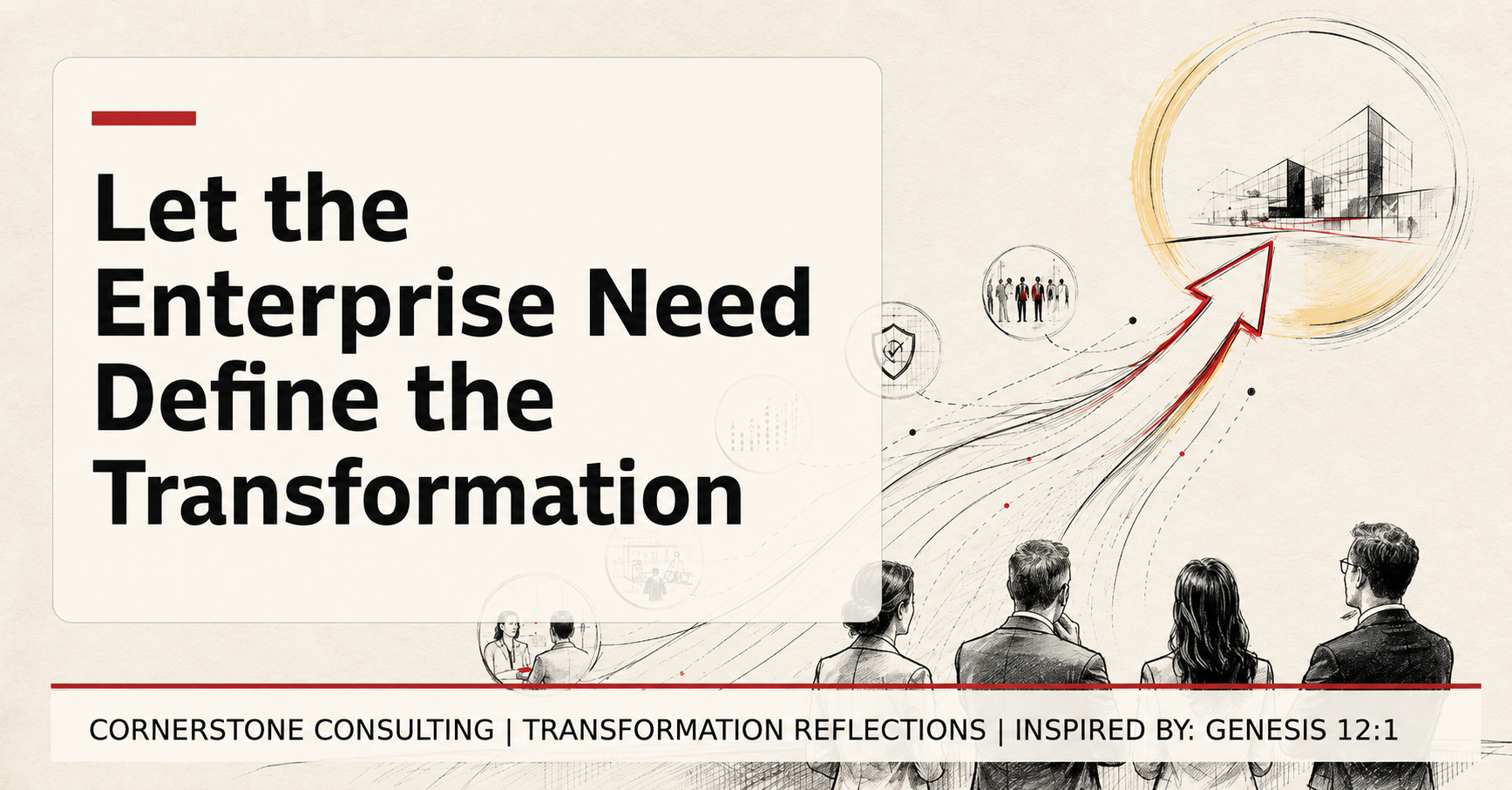
Most transformations begin with a solution already in mind.
But when the real enterprise need is unclear, speed becomes expensive.
Let the need define the transformation.
I have seen programs inherit a solution before leaders agreed on the real enterprise condition that needed to change. When the business need is named honestly, scope, governance, architecture, and value conversations become clearer and less political.
Many transformations begin with a solution already in mind. A platform is selected, a program is named, a budget is approved, and the organization moves quickly into delivery. The movement can feel decisive. It can also hide a more important question: did the enterprise need define the change, or did the chosen solution define it?
Executives are often under pressure to act. Markets shift, costs rise, controls weaken, customers expect more, and legacy systems become harder to defend. Action is necessary. But action becomes clearer when leaders first listen for what the enterprise is revealing.
Where is value leaking? Which decisions keep returning to the same unresolved conflict? Where are teams compensating for weak data, unclear ownership, or fragmented process? Which customers, employees, or business units are carrying the cost of a design that no longer fits?
Those signals help leaders name what must truly become different. The transformation may require a new system, but the system is not always the real change. The real change may be a capability that needs ownership, an operating model that needs decision rights, a control environment that needs discipline, or a leadership team that needs one shared definition of success.
When executives let the real need name the change, scope becomes more honest. Governance becomes less political. Architecture becomes more useful because it connects the visible initiative to the underlying enterprise condition.
This does not slow transformation. It prevents speed from becoming expensive confusion.
A practical executive move is to ask every major initiative: what enterprise condition made this necessary, and what evidence will show that condition has changed? If the answer is thin, the organization may be funding activity without transforming the source problem.
The best transformation work often begins when leaders stop defending the first answer and start listening carefully to what the enterprise is already telling them.
Reflection
Where has a preferred solution started to define the transformation before the enterprise need was clear?
Practice
Before approving the next major decision, write one sentence that names the enterprise condition that must become different, then test whether scope, governance, measures, and architecture all trace back to it.
Comments wlecome!
Darin Paton is the Owner of Cornerstone Consulting Inc., an Alberta-based enterprise architecture and ERP transformation advisory firm serving organizations across complex business and technology change for over 15 years. 30+ years as an EA and advising ERP transformations.

Leave a Reply