

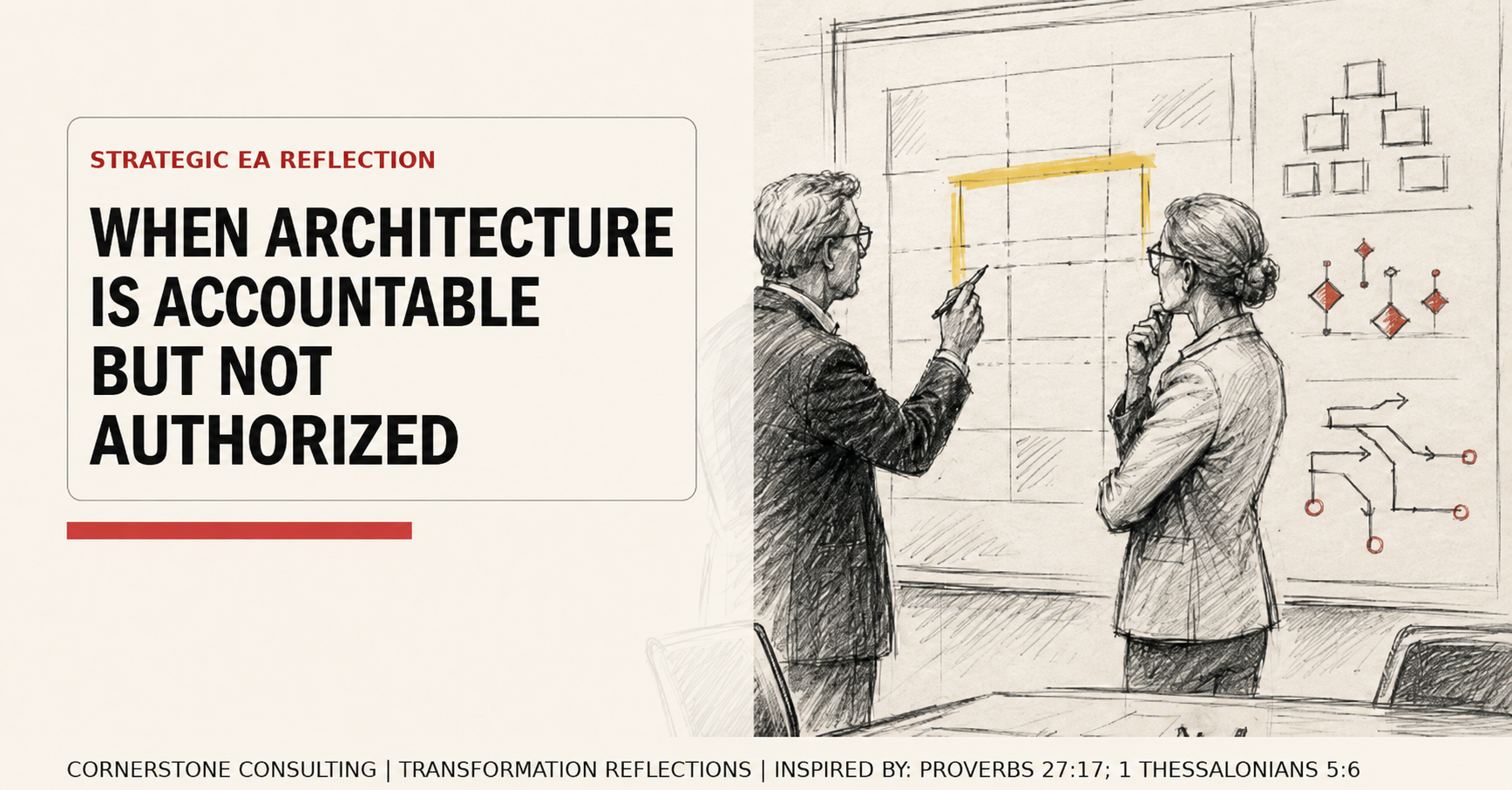
Authority gaps do not stay quiet.
They get sharper when peers are awake enough to name them.
Here is why mandate clarity is a team discipline.
I have seen architecture teams blamed for not stopping a decision they were never clearly authorized to challenge. The healthiest moments came when peers sharpened the decision together: sponsor, delivery, risk, data, SAP, and EA naming who advises, who approves, and who escalates.
Unclear authority is rarely solved by one courageous architect. It is solved when the right peers stay awake together long enough to define how decisions should actually work.
An Enterprise Architect may be asked to support a transformation, review a solution, or provide a point of view. But the organization often leaves the hard part unsaid. Does EA have approval authority? Is it advisory only? When should architecture escalate risk? Who decides when enterprise coherence matters more than local speed?
When those questions stay vague, teams drift into habits. Delivery assumes architecture is a late review. Sponsors assume architecture is useful until it challenges timing. Technology teams assume solution decisions are local. Risk and controls assume someone else has checked the operating impact. The architect can raise concerns, but without a shared mandate, the concern sounds like personal preference.
Peer discipline changes that. The EA mandate and decision-rights canvas should not be written by architecture alone. It should be shaped with the leaders who live with the consequences: business sponsors, product owners, delivery executives, process owners, data leaders, cybersecurity, controls, finance, and operations. Each group helps clarify what evidence is needed and where the decision must travel before it hardens.
This is where EA coaching matters quietly. The work is not to make architecture louder. It is to help the enterprise create enough shared language that decisions can be sharpened without becoming political. Awake peers do not remove tension. They make tension useful.
The clarity also protects speed. When leaders agree on the mandate before pressure rises, architecture does not need to renegotiate its role during every tense decision. Teams can move faster because the route for advice, approval, and escalation is already understood.
Reflection
Which peers need to help define your architecture mandate so it is trusted outside the EA team?
Practice
Run a 45-minute mandate canvas session with five peers. Ask: which decisions need EA advice, approval, escalation, or no involvement? Then agree on one decision type to clarify before the next portfolio or transformation gate.
Welcome comments and experiences.
Darin Paton is the Owner of Cornerstone Consulting Inc., an Alberta-based enterprise architecture and SAP ERP transformation advisory firm serving organizations across complex business and technology change for over 15 years. 30+ years as an EA and advising SAP transformations.

Leave a Reply