

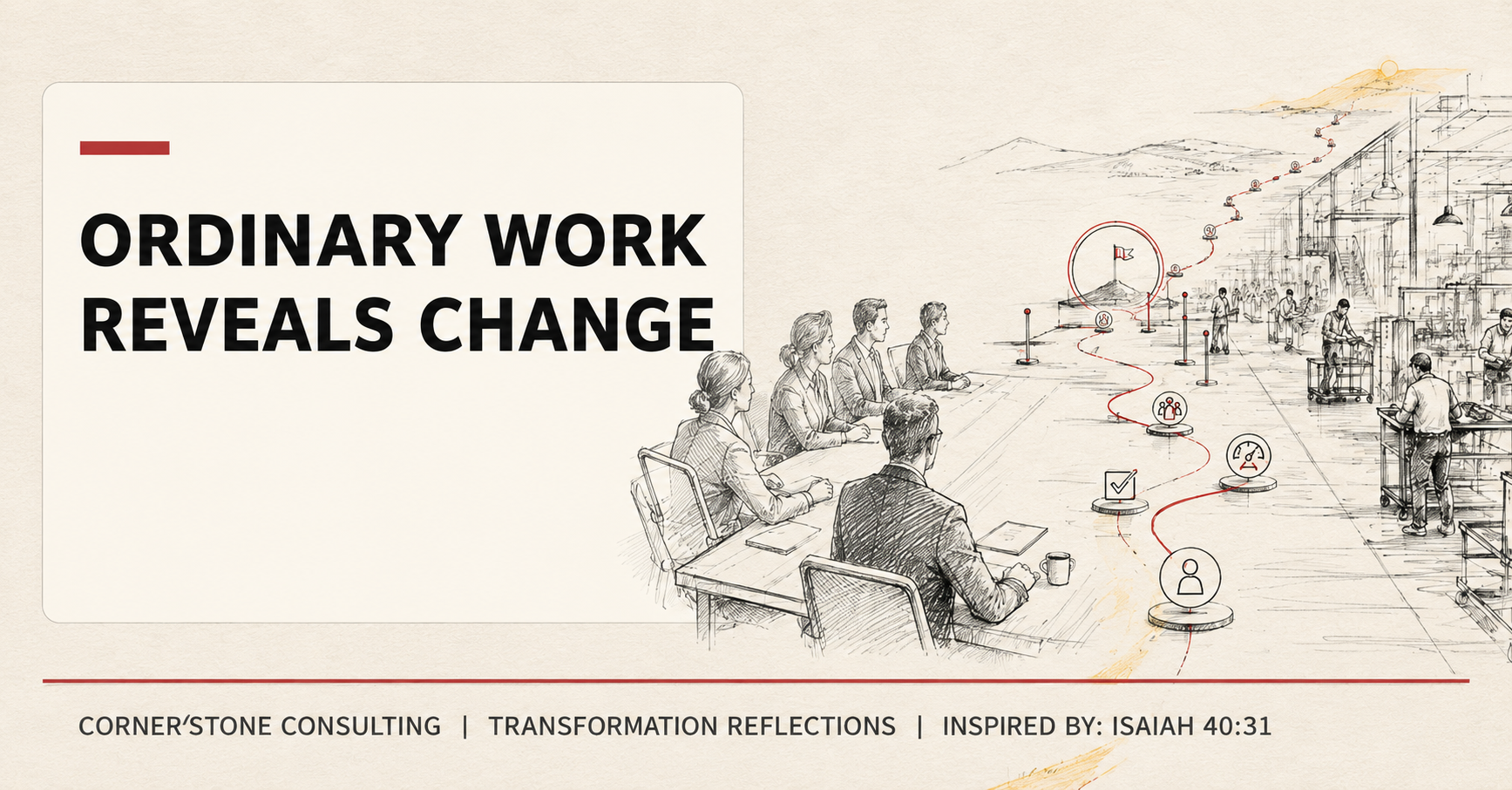
Transformation can look impressive in the room.
The harder test comes on an ordinary Tuesday.
That is where leaders see what really changed.
I have seen programs look strong in governance and weak in daily work. The real question is not whether the room approved the change, but whether ordinary decisions, ownership, data, and controls still behave differently after the program energy fades.
Executive teams often judge transformation by the visible moments: approval meetings, roadmap decisions, design sign-offs, testing cycles, go-live weekends, and executive updates. Those moments matter, but they can also create a false sense that the enterprise has changed because the program had energy.
The more reliable test is quieter. What happens when the room is no longer dramatic? How do managers make decisions on a normal Tuesday? Do teams use the new process when no one from the project is watching? Do leaders still honor the decision rights they approved? Does data ownership remain clear after the migration is complete? Are exceptions handled through the operating model, or through the old personal networks?
That is where executives discover what they are really transforming. Not the platform. Not the project language. Not the deck. The enterprise changes when ordinary work starts to carry a different pattern.
This is why transformation needs more than urgency. Urgency can launch a program, but steadiness proves whether the enterprise has learned. The executive task is to look beneath activity and ask what daily operating habit must become different. If the answer is unclear, the organization may be modernizing tools while leaving the real system untouched.
Enterprise architecture helps by making the ordinary work visible: capabilities, decisions, information, controls, dependencies, and ownership. It gives leaders a way to see whether the new design is becoming lived practice or remaining a project artifact. This is quiet work, but it is often the work that keeps benefits from evaporating after the celebration ends.
A useful executive question is simple: what behavior will show, six months from now, that this part of the enterprise is truly different?
If leaders cannot name that behaviour, they may be measuring movement instead of change. If they can name it, govern it, and reinforce it through real decisions, transformation has a chance to survive beyond the moments that felt important.
Reflection
Where are you relying on the visible energy of the program instead of evidence that normal work has changed?
Practice
In the next steering discussion, ask each accountable owner to name one ordinary behavior that must look different six months after go-live, and what evidence will prove it.
Comments welcome.
Darin Paton is the Owner of Cornerstone Consulting Inc., an Alberta-based enterprise architecture and SAP ERP transformation advisory firm serving organizations across complex business and technology change for over 15 years. 30+ years as an EA and advising SAP transformations.

Leave a Reply