

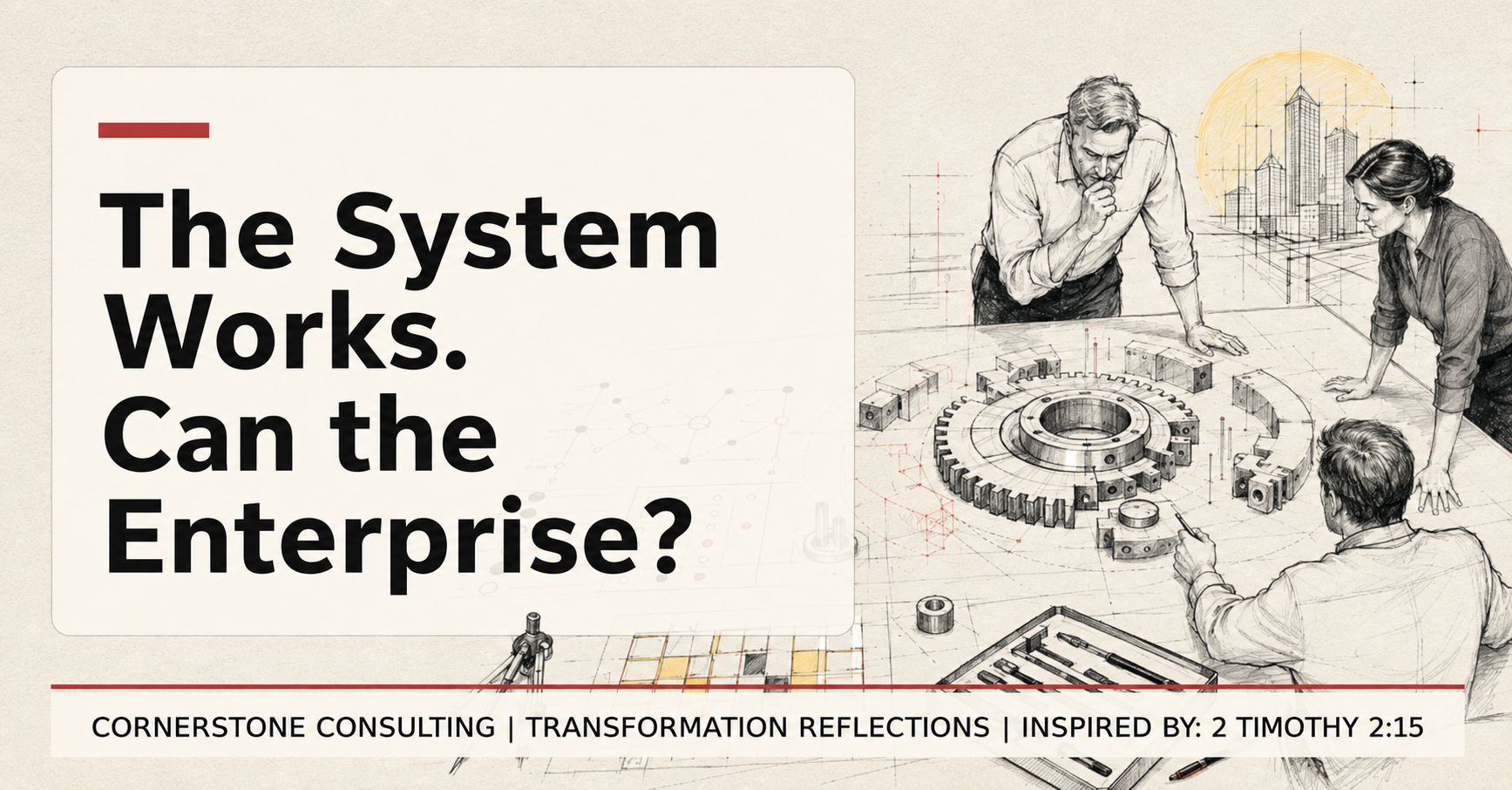
A transformation can have ambition and still lack readiness.
The test is not whether leaders want change.
It is whether the enterprise has the tools to work differently.
I have watched executive confidence rise around a program while teams still lacked the practical tools to operate differently. Real readiness shows up in ownership, decision paths, data, controls, support, and the ability to perform the new work without heroic effort.
A transformation can have a bold ambition and still fail because the enterprise is not ready to work differently. The strategy may be right, the case for change may be strong, and the executive commitment may be visible. But if the organization lacks the practical tools of change, the promise stays above the work.
Readiness is not a slogan. It is the condition of the enterprise to perform the new way with confidence. Are process owners equipped to make decisions? Are managers ready to coach the new behaviour? Are data definitions clear enough to be trusted? Are controls designed into the work rather than added later? Are SAP, integration, reporting, and support teams aligned around the same business capability?
Executives can miss this because project status often reports activity, not preparedness. Training delivered is not the same as capability formed. Design approved is not the same as ownership accepted. A tool implemented is not the same as an enterprise ready to use it well.
The deeper question is: what are we really transforming? If the answer is only a system, then readiness will be measured technically. If the answer is a business capability, then readiness must include people, decisions, data, controls, support, and governance.
Prepared tools reveal serious intent. In enterprise change, those tools include decision forums that actually decide, architecture that clarifies dependencies, business owners who understand their accountability, and measures that show whether outcomes are changing.
This is where a disciplined architecture view protects executives from vague confidence. It shows what must be ready before the enterprise can honestly say it is changing.
The practical test is not whether the organization is busy. It is whether the people closest to the work have what they need to operate the new model without heroic effort. When they do, transformation becomes less dependent on program pressure and more embedded in the enterprise itself.
Reflection
Where has your transformation assumed readiness because activity was underway?
Practice
Ask for a readiness review that names the practical tools needed for the new capability: decision forums, accountable owners, data definitions, controls, support paths, measures, and coaching routines.
Comments welcome.
Darin Paton is the Owner of Cornerstone Consulting Inc., an Alberta-based enterprise architecture and SAP ERP transformation advisory firm serving organizations across complex business and technology change for over 15 years. 30+ years as an EA and advising SAP transformations.

Leave a Reply