

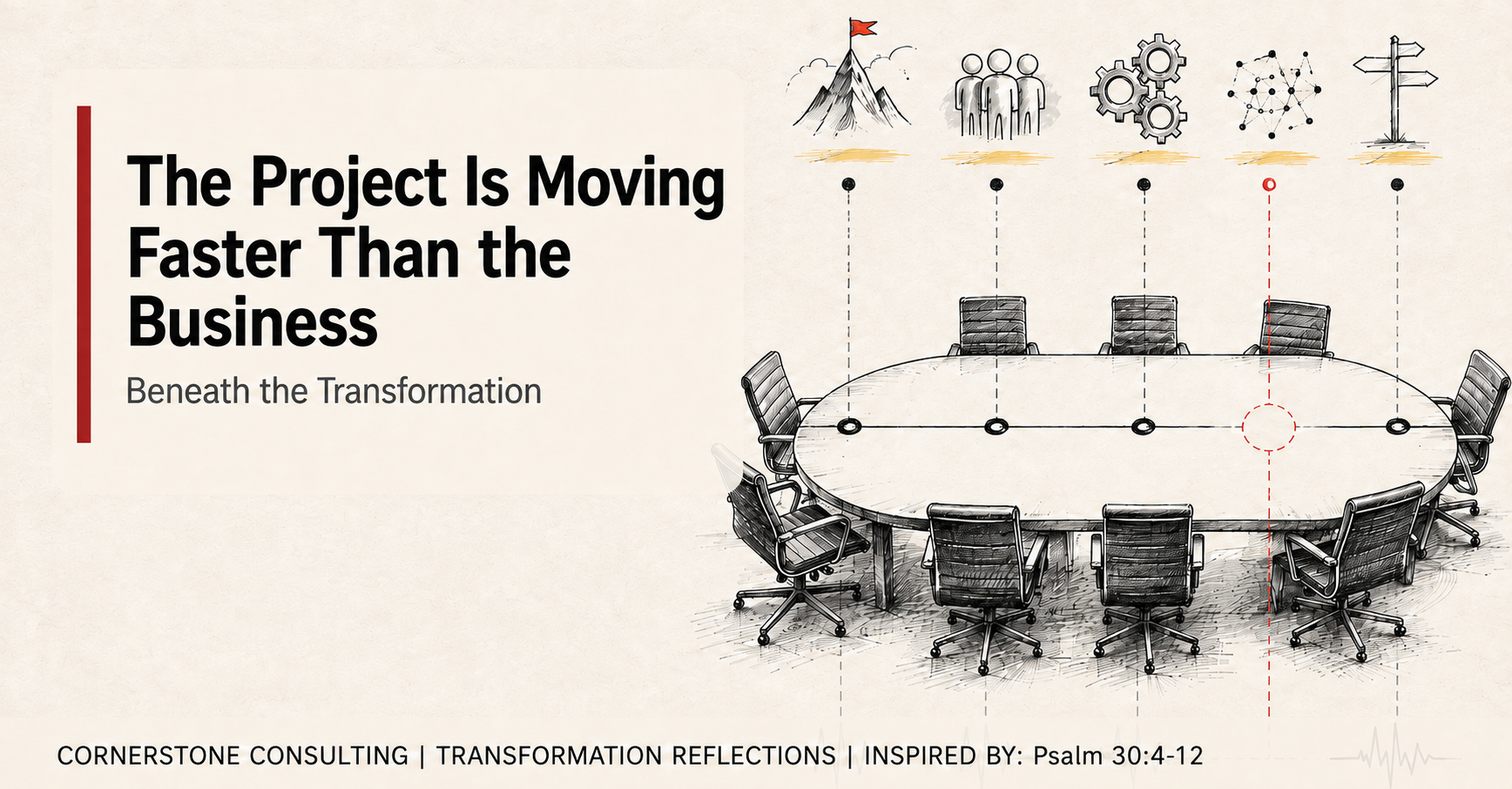
Speed can hide a readiness problem.
One team moves forward while ownership, data, controls, systems, or adoption are still catching up.
That gap is where transformation risk starts to grow.
I have seen small missed beats expose large transformation risks: a decision made too early, a data owner missing, training ahead of process stability, or benefits ahead of behaviour. These gaps help leaders see where the enterprise rhythm is not yet coordinated.
Every enterprise has a rhythm. Strategy sets one beat. Funding sets another. Governance, delivery, operations, data, controls, customers, and people all add their own cadence. A transformation program often assumes these beats will line up because the plan says they should. Real organizations are rarely that tidy.
The missed beat is where executives should pay attention.
It might be a steering decision made before the operating owner is ready. It might be a system design approved before data accountability is settled. It might be training scheduled before the process is stable. It might be a benefits case that expects behaviour the organization has not yet learned. On the surface, each issue may look small. Beneath the plan, each one can show that the enterprise rhythm is not yet coordinated.
This is not a reason to lose confidence. It is a reason to listen better. In music, a missing beat tells the listener something about the pattern. In transformation, a missing operating beat tells leaders where the formal plan and lived enterprise are out of sync.
Enterprise architecture can help executives hear those gaps early. Capability models, value streams, dependency maps, decision-right clarity, controls, information flows, ERP and integration views, and adoption evidence all help translate noise into rhythm. The point is not to create more documentation. The point is to help leaders understand whether the enterprise can move together after the program team steps away.
Executive leaders should ask: where is the rhythm breaking? Which team is moving faster than the owner, control, system, or data condition that supports it? Which dependency is being treated as background noise when it is actually setting the tempo?
A transformation becomes more durable when leaders stop measuring only motion and begin listening for coordination. The missed beat may be the signal that protects the whole performance.
Reflection
Which missed beat in your transformation may be showing you where the enterprise is not yet coordinated?
Practice
Ask for a rhythm review: map one critical outcome across strategy, funding, decision rights, process ownership, SAP/core systems, data, controls, adoption, and benefits evidence.
Comments Welcome
Darin Paton is the Owner of Cornerstone Consulting Inc., an Alberta-based enterprise architecture and SAP ERP transformation advisory firm serving organizations across complex business and technology change for over 15 years. 30+ years as an EA and advising SAP transformations.

Leave a Reply