

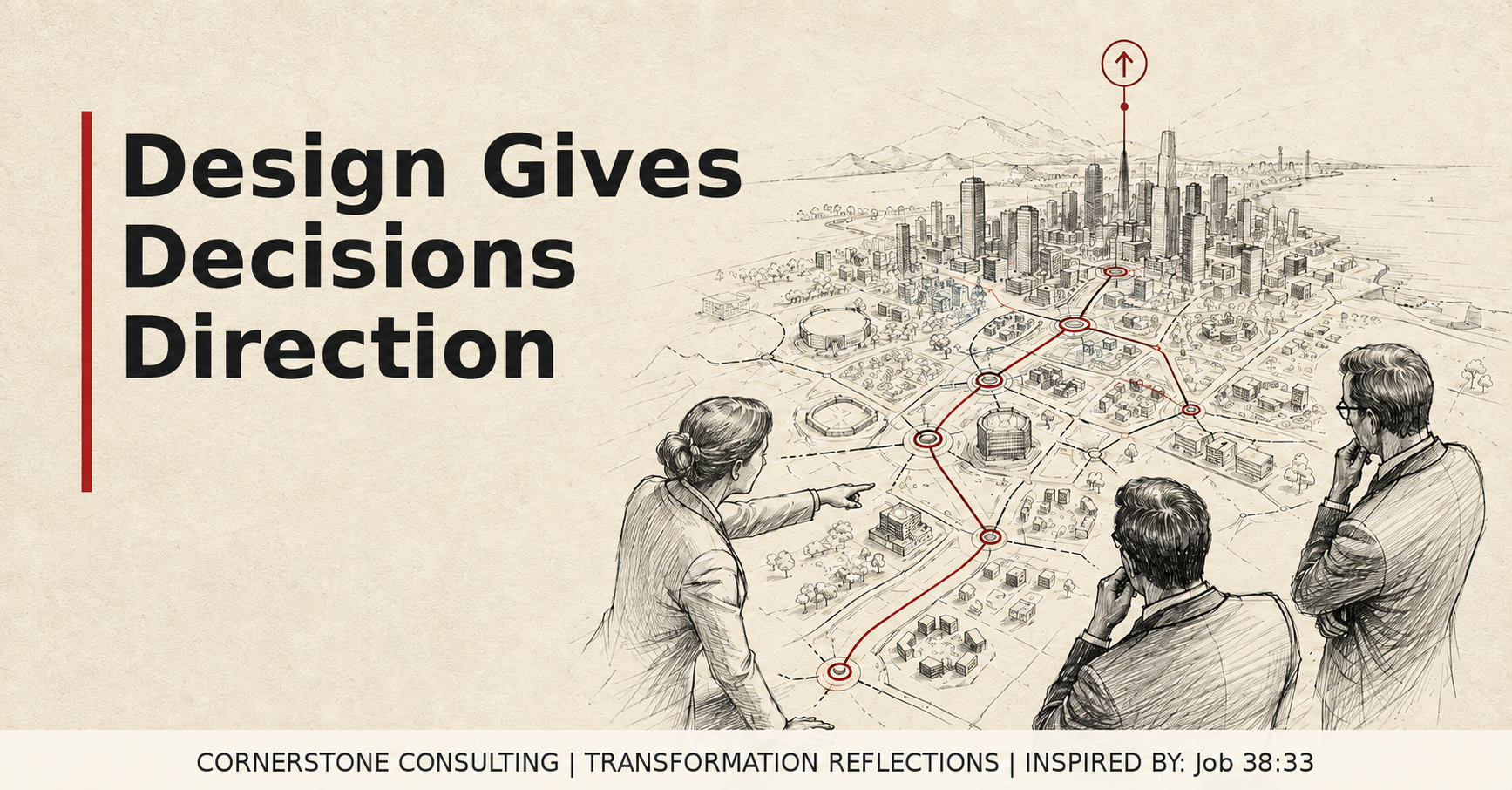
Good design helps leaders know which way is up when the enterprise is upside down.
Enterprise Architecture turns complexity into orientation before decisions harden.
I have seen leaders regain confidence when architecture gives them orientation, not extra noise. A good map does not explain everything. It shows the few relationships, risks, and decision points that help the enterprise move wisely. More reflections at https://www.cornerstonea.com/.
When an enterprise is under pressure, it can feel upside down. Programs are moving. Vendors are presenting. Business units are asking for speed. Finance is watching cost. Risk is asking for control evidence. Delivery teams are trying to keep commitments. Everyone has a partial view, and each view can sound reasonable on its own.
This is where design matters.
Enterprise Architecture is not design for decoration. It is design for orientation. It helps leaders know which way is up when the enterprise is too complex to navigate by instinct. A capability view shows what the organization is really trying to improve. An operating-model view shows who must own the change. A dependency view shows what must be sequenced. A data view shows where decisions rely on definitions, lineage, and trust. A technology view shows which platforms, SAP or core systems, integrations, and vendor commitments shape the path.
This kind of design does not need to be exhaustive. In fact, exhaustive architecture can make orientation harder. The value is in showing the right relationships at the right time so leaders can make the next decision with more confidence.
The architect’s work is similar to giving the enterprise a reliable sense of direction. Not every detail needs to be on the map, but the map must show the terrain that can change the outcome. Where are the hidden dependencies? What makes the target state viable? What must be true before the roadmap is credible? Which decision will create options, and which one will close them?
When architecture does this well, it stops sounding like a methodology and starts behaving like wisdom for action. It gives the enterprise a practical way to see, decide, and adjust.
An Enterprise Architect earns influence when design helps leaders orient themselves before movement becomes momentum.
Reflection
Does my architecture work help leaders orient the decision, or does it add detail without direction?
Practice
For one strategic initiative, create a one-page orientation map with only five elements: capability outcome, accountable owner, critical dependency, major trade-off, and next decision. Use it to test whether leaders agree on which way is up.
Comments Welcome
Darin Paton is the Owner of Cornerstone Consulting Inc., an Alberta-based enterprise architecture and SAP ERP transformation advisory firm serving organizations across complex business and technology change for over 15 years. 30+ years as an EA and advising SAP transformations.

Leave a Reply