

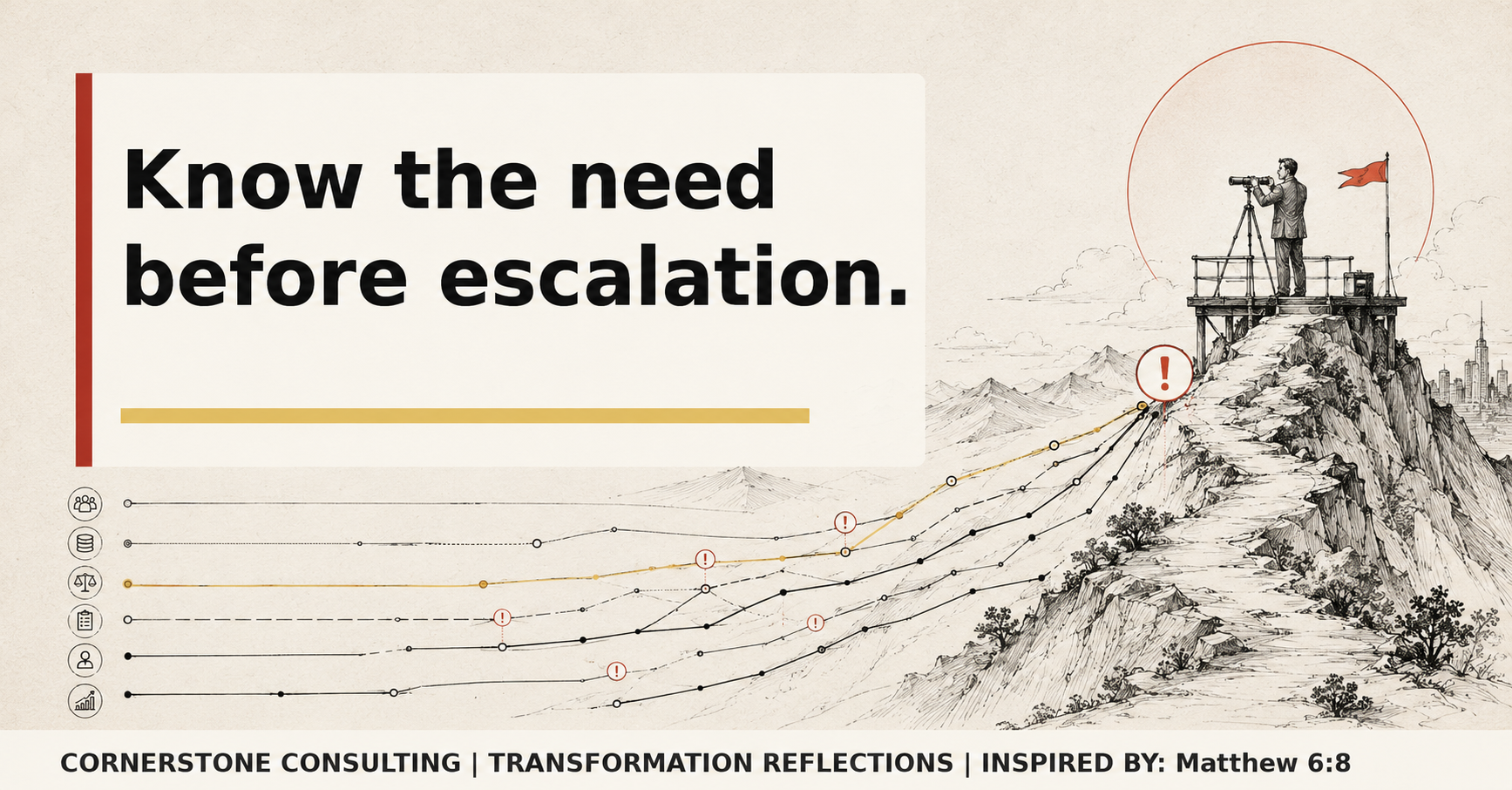
By the time an issue escalates, it is already expensive.
Real progress is visible earlier.
Here is what executives should know before the ask:
I have seen transformation needs surface too late because the reporting only captured visible issues. Better progress conversations began when leaders asked for early evidence across capability, ownership, data, controls, and decision paths before escalation was required.
Activity is not progress when leaders only discover needs after they become escalations.
Executives often see transformation through formal channels: status reports, risk logs, budget updates, and steering committee decisions. These channels matter, but they usually show issues after they have already become visible enough to name. By then, the cost of correction may be higher, the options may be narrower, and the teams may already be working around a condition leadership should have understood earlier.
Meaningful progress requires earlier knowledge.
The question is not whether every issue has been reported. The question is whether the leadership system can sense what the enterprise needs before those needs become crisis language.
This is where activity can mislead. A busy program can produce many updates while still missing the early signals of weak progress: unclear decision rights, unresolved process ownership, fragile data definitions, benefits without accountable owners, controls designed too late, or business teams adopting the system without changing the work.
When those signals are not understood early, the program still looks active. But progress is thin. The enterprise is moving, yet not necessarily maturing.
Executives need a better listening system. Enterprise architecture can help because it traces how decisions, capabilities, processes, information, platforms, controls, and owners depend on each other. It can show where progress is vulnerable before the vulnerability becomes a steering issue.
The value is not in predicting every problem. The value is in knowing the enterprise well enough to recognize what must be true for progress to be real.
Leaders should ask for evidence that the organization is learning before it is forced to escalate. Are owners making better decisions? Are teams reducing dependency on project specialists? Are controls becoming operable? Are data issues declining? Are benefits being measured by the business, not only promised by the program?
Escalation tells you where pain has become visible. Progress evidence tells you whether the enterprise is becoming healthier before the pain has to shout.
Reflection
Where is your transformation depending on escalation to reveal needs that leadership should be able to sense earlier?
Practice
Create an early-progress review for one major outcome. Look for leading evidence across ownership, data, decisions, controls, readiness, adoption, and benefit movement before the next formal escalation.
Comments Welcome
Darin Paton is the Owner of Cornerstone Consulting Inc., an Alberta-based enterprise architecture and SAP ERP transformation advisory firm serving organizations across complex business and technology change for over 15 years. 30+ years as an EA and advising SAP transformations.

Leave a Reply