

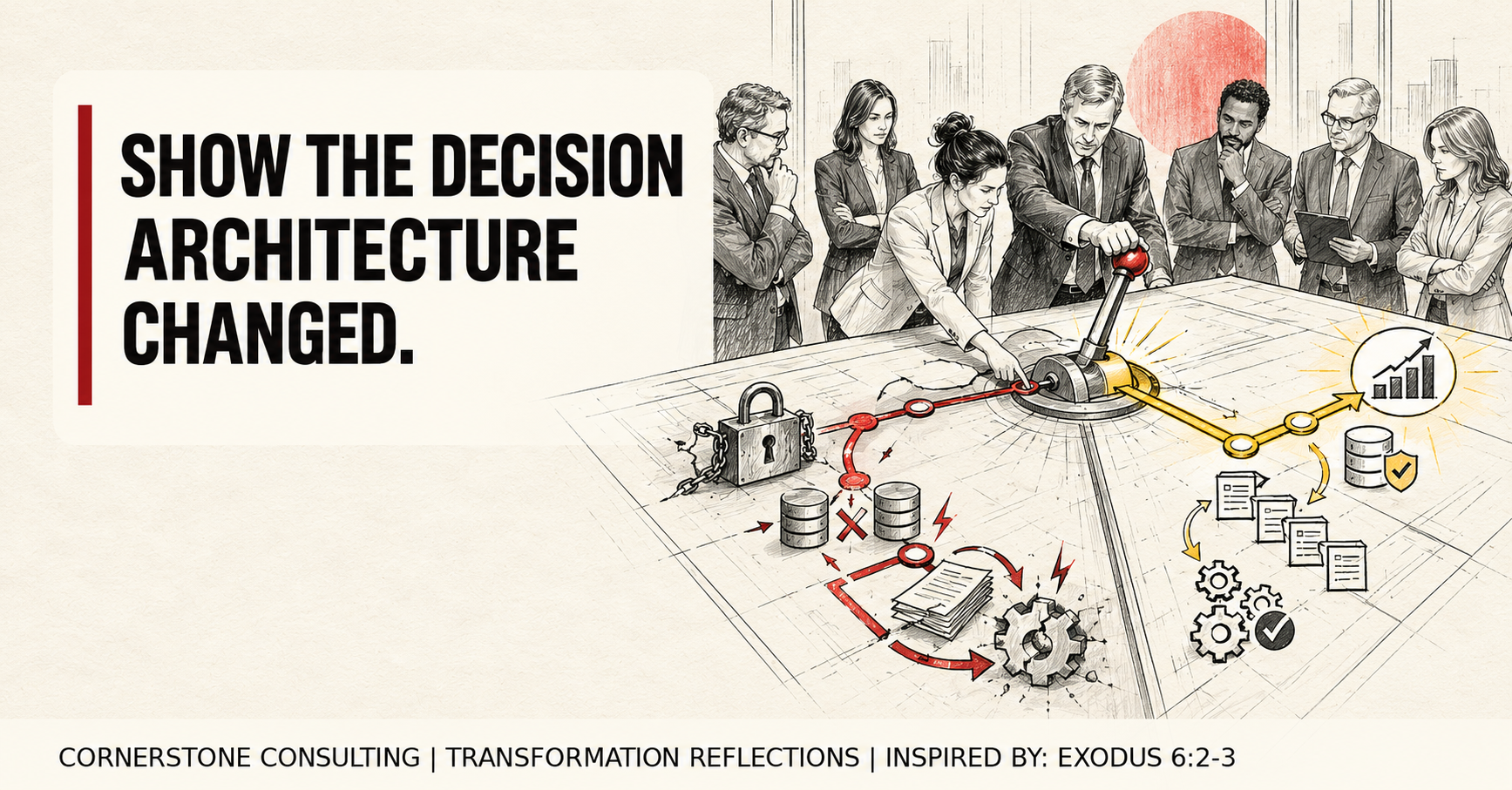
Most organizations say they value architecture.
Few can name the last decision it changed.
Start with one real situation.
“I have seen architecture value mature when teams stopped describing EA in general terms and started showing how it helped a specific decision, risk, dependency, or operating-model issue. Real situations create real proof.”
Many organizations say they value Enterprise Architecture. Fewer can explain exactly how architecture changed an enterprise outcome last quarter.
That gap matters.
Architecture value matures through real situations. It is one thing to say EA improves alignment, reduces complexity, and supports transformation. It is another thing to show that architecture helped leaders choose the right sequence, expose a hidden dependency, protect a core process, assign data ownership, or avoid a vendor commitment that would have limited future options.
Enterprise Architects should not be satisfied with abstract value statements. The enterprise needs situational evidence.
What did architecture reveal during the business case? What changed during solution shaping? What was prevented during procurement? What operating-model issue became visible before go-live? What benefit became traceable because capability, process, data, controls, and technology were connected?
This does not require a complicated measurement system. It requires disciplined observation. Each meaningful initiative should leave a short record of how architecture affected the work. Not the number of meetings attended. Not the number of artifacts produced. The decision impact.
Over time, those records become more than performance reporting. They become organizational learning. Leaders begin to see where architecture is strongest, where it is missing, and where it should be engaged earlier. Architects begin to see whether their work is changing decisions or merely documenting them.
This is how a practice grows up. It moves from claiming value to recognizing where value is actually being created. It also becomes more honest. Some architecture activity will not produce much impact. That is useful to know. The goal is not to protect activity. The goal is to improve enterprise outcomes.
That kind of honesty is healthy for the practice. It helps architects stop investing energy in work that looks professional but does not alter decisions. It also helps sponsors see where EA coaching, better intake, earlier engagement, or stronger operating-model analysis would produce a better return. Real situations become the curriculum for better architecture.
Reflection
Where is your architecture practice still describing value in theory instead of learning from real situations?
Practice
After each major decision point, write a short impact note: decision context, architecture contribution, business consequence, and evidence. Review the notes quarterly with sponsors.
Comments Welcome
Darin Paton is the Owner of Cornerstone Consulting Inc., an Alberta-based enterprise architecture and SAP ERP transformation advisory firm serving organizations across complex business and technology change for over 15 years. 30+ years as an EA and advising SAP transformations.

Leave a Reply