

The plan is not the only thing people remember.
They also remember which commitments leaders kept.
Repair the breach before asking for adoption.
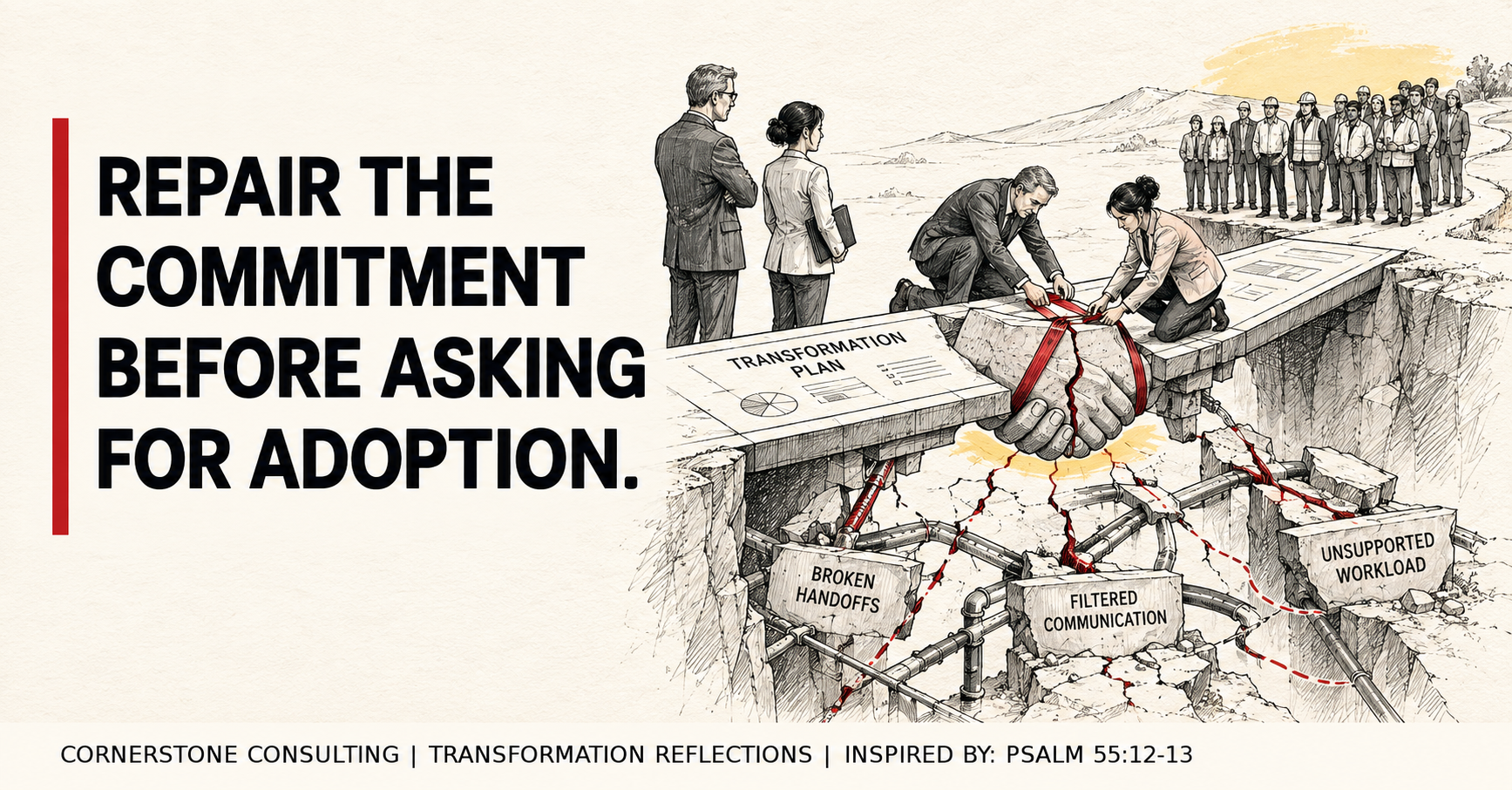
I have seen technically sound programs lose momentum because trust broke underneath the plan: leaders withheld concerns, teams protected themselves, and old wounds shaped new decisions.
Transformation depends on trust more than most executive dashboards show. The plan may describe scope, milestones, risks, resources, and decisions. But beneath that formal structure are relationships, commitments, expectations, and memories. When trust breaks there, the visible program becomes harder to lead.
Trust can break in ordinary ways.
A team raises a concern and feels dismissed. A business unit believes the design was decided before consultation began. A sponsor promises capacity and then leaves managers to absorb the workload. A project asks for adoption while employees remember the last initiative that left them unsupported. None of these issues may appear as a formal betrayal. Yet they can create the same operating effect: people protect themselves instead of leaning into the change.
For an executive, trust is not a soft side issue. It is transformation infrastructure.
When trust is weak, bad news gets filtered, decisions move offline, resistance becomes coded language, and leaders receive a cleaner picture than reality supports. Rebuilding trust requires more than reassurance. It requires visible repair over time: naming the issue, accepting ownership, changing the pattern, and proving through repeated decisions that the new way is safe enough to believe.
Enterprise architecture can help by showing where trust problems are becoming operating risks. Broken handoffs, unclear ownership, hidden exceptions, late control concerns, weak support models, and repeated workarounds often point to relationship damage beneath the plan. Cornerstone’s advisory and EA coaching work can help executives bring those signals into governance without making the conversation personal or promotional.
A transformation plan can absorb many delivery problems. But when trust breaks beneath it, leaders must repair the relationship system as seriously as they repair scope, budget, or schedule.
This is why executive presence matters. People watch whether leaders honour commitments, tell the truth about trade-offs, and respond fairly when concerns surface. Trust is rebuilt through patterns, not speeches. Each visible repair gives the enterprise one more reason to participate honestly in the change.
Reflection
Where might low trust be showing up as filtered news, quiet resistance, offline decisions, or protection behaviour inside the transformation?
Practice
Add trust signals to executive governance: unresolved concerns, repeated escalations, bypassed forums, adoption resistance, and promises made but not yet honoured.
Comments Welcome
Darin Paton is the Owner of Cornerstone Consulting Inc., an Alberta-based enterprise architecture and SAP ERP transformation advisory firm serving organizations across complex business and technology change for over 15 years. 30+ years as an EA and advising SAP transformations.

Leave a Reply