

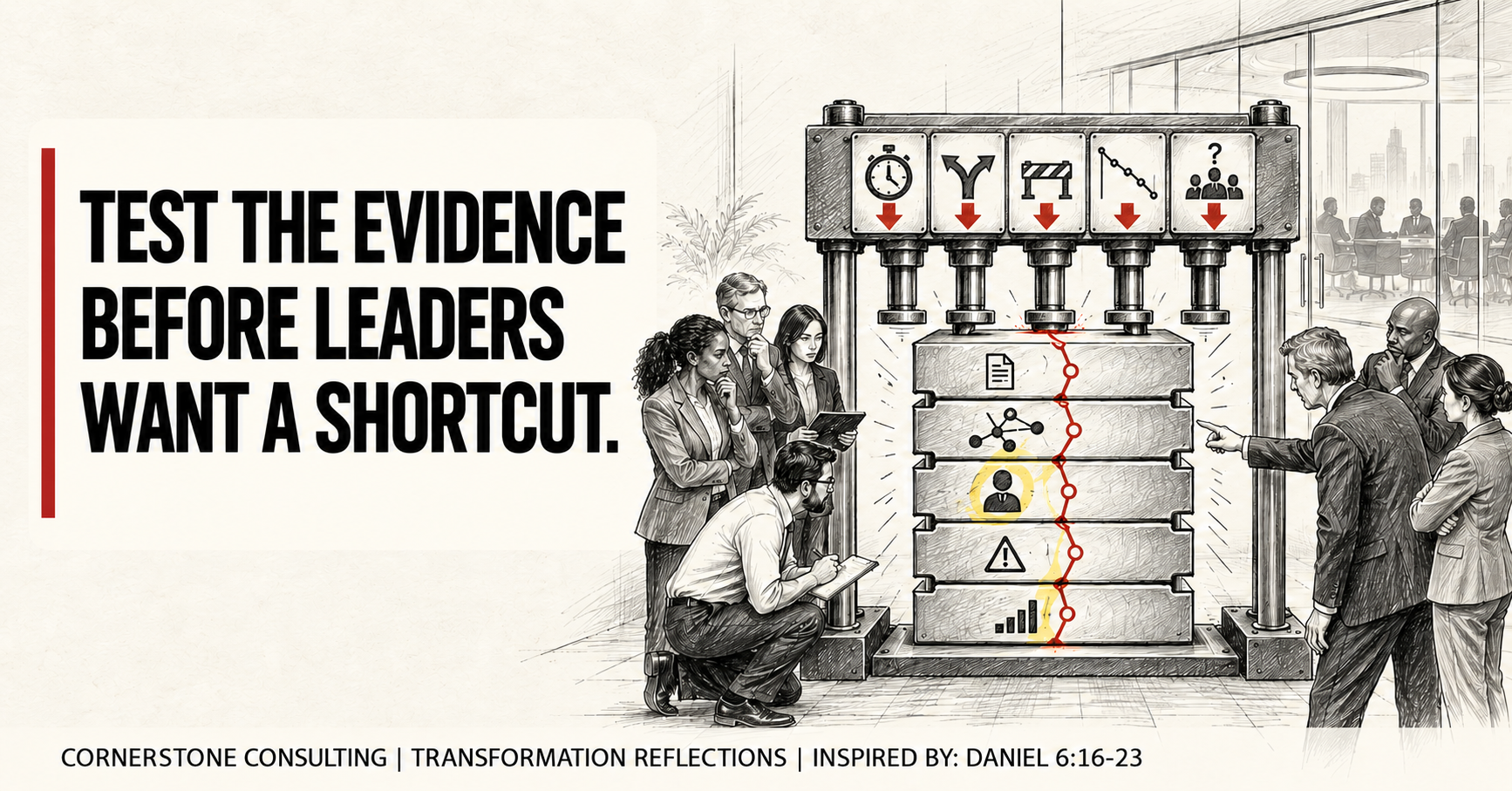
A deadline slips. A vendor offers a shortcut.
If only the architect understands the consequence, the evidence is fragile.
Can a new executive follow it in ten minutes?
“I’ve been in the room when leaders wanted a shortcut, and I learned that testing the evidence first prevents a fast decision from becoming an expensive mistake.”
Architecture impact is easiest to discuss when the room is calm. Everyone supports alignment, governance, simplification, and better decisions when the cost is abstract.
Pressure changes the conversation.
A deadline is threatened. A vendor option looks faster. A local leader wants an exception. A data issue puts reporting confidence at risk. A SAP design decision creates downstream process tension. A regulator, customer, or board question suddenly needs a clear answer.
In those moments, architecture activity does not help much by itself. The enterprise needs proof it can use.
Has the decision been recorded clearly? Are the trade-offs visible? Is the dependency map trusted? Does the operating model show who owns the consequence? Can leaders see which risks are temporary, which are structural, and which will become permanent cost if ignored?
This is where business impact must hold under pressure.
For the Strategic Enterprise Architect, the lesson is practical. Build architecture evidence so it can be used when conditions are uncomfortable. A value scorecard should not be a pleasant after-the-fact summary. It should help leaders see what architecture changed before pressure rewrites the story.
Pressure also reveals whether architecture is connected to the enterprise or isolated inside a function. If the architect is the only person who understands the dependency, the evidence is fragile. If business, technology, finance, risk, and operations leaders can all recognize the same consequence, the evidence becomes stronger.
The goal is not to win an argument during a crisis. The goal is to help the enterprise remain honest about its commitments. Architecture earns trust when its impact can still be seen when the easy answer is no longer available.
That requires preparation before the difficult meeting. A pressure-tested architecture practice keeps evidence current, understandable, and owned by the right people. It does not wait until the crisis to assemble the story. It builds the story into the work so leaders can rely on it when the organization wants a shortcut.
Reflection
Which architecture evidence would still be trusted if the decision came under pressure tomorrow?
Practice
Choose one high-pressure initiative and test the evidence pack: decision record, dependency map, ownership model, risk view, and value scorecard. Ask whether a new executive could understand the consequence in ten minutes.
Comments Welcome
Darin Paton is the Owner of Cornerstone Consulting Inc., an Alberta-based enterprise architecture and SAP ERP transformation advisory firm serving organizations across complex business and technology change for over 15 years. 30+ years as an EA and advising SAP transformations.

Leave a Reply